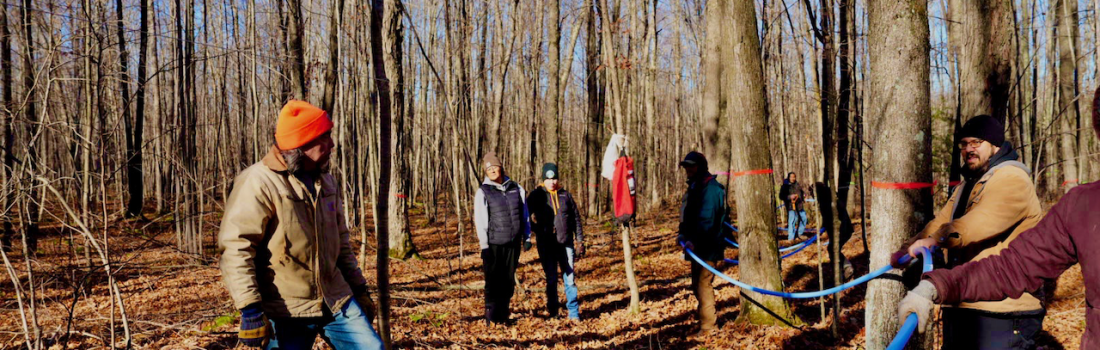
On a bright November morning, twenty‑one participants gathered in the Bad River Food Sovereignty Sugarbush for a hands‑on Maple Syrup Tubing Workshop. Warmed by coffee sweetened with last season’s syrup, they prepared for a day of learning that reflects a growing movement to strengthen intertribal collaboration and expand Tribal maple production across Wisconsin.
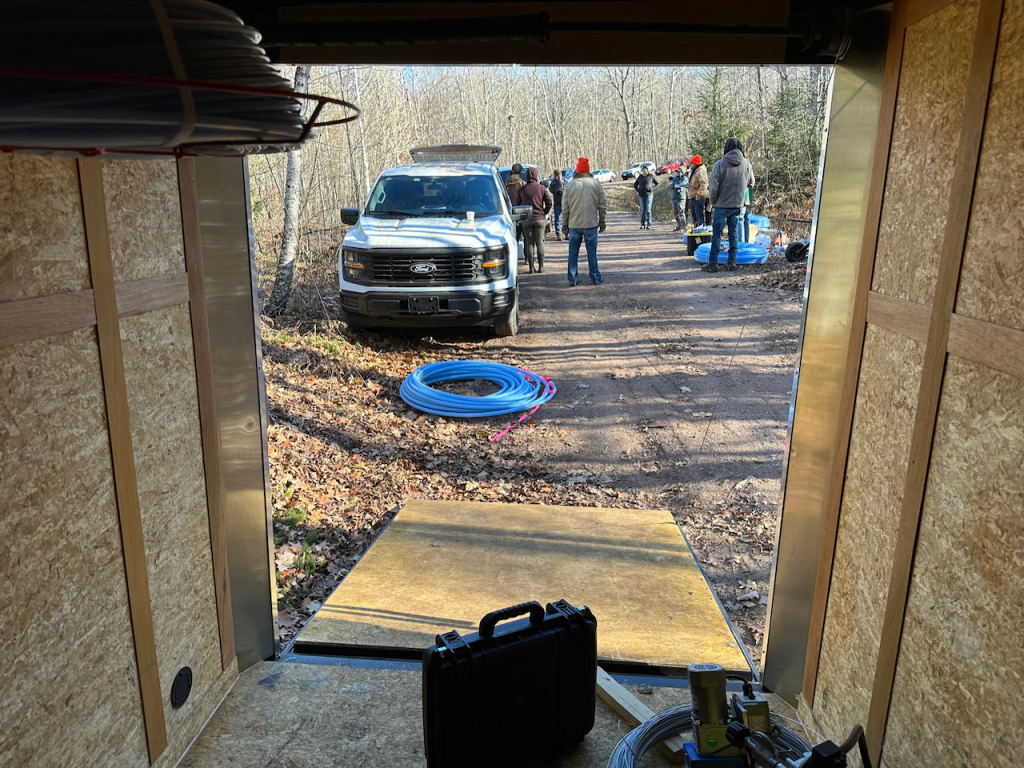
The Indigenous Food System Resilience Project, funded through the Wisconsin Rural Partnerships Institute, organized the training in response to Bad River’s request for support installing a new tubing system. The Menominee Department of Agriculture and Food Systems played a major role, bringing their fully stocked tubing trailer so participants could practice real installation techniques. Additional support came from the Wisconsin Tribal Conservation Advisory Council, The Great Lakes Indian Fish and Wildlife Commission, and the Great Lakes Intertribal Food Coalition.
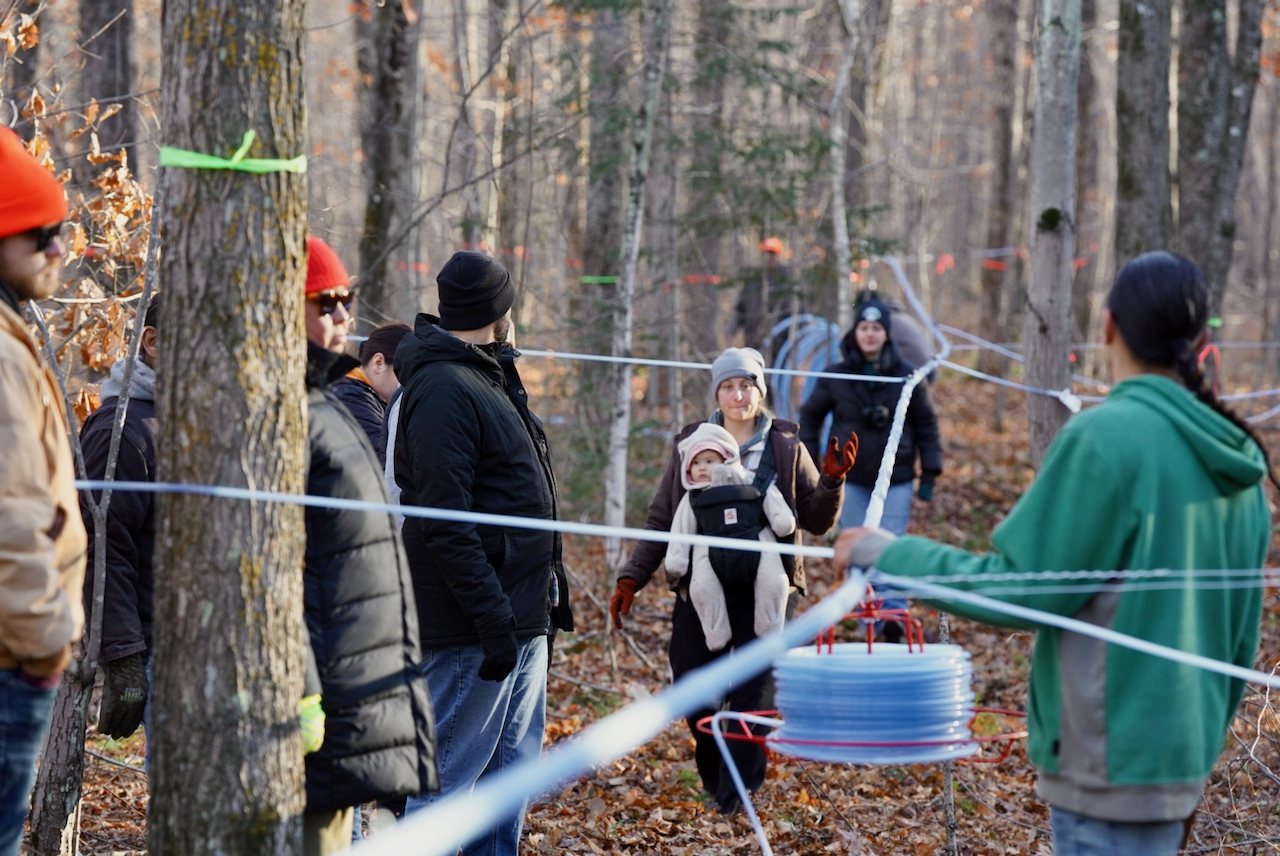
Photo by Dan Cornelius.
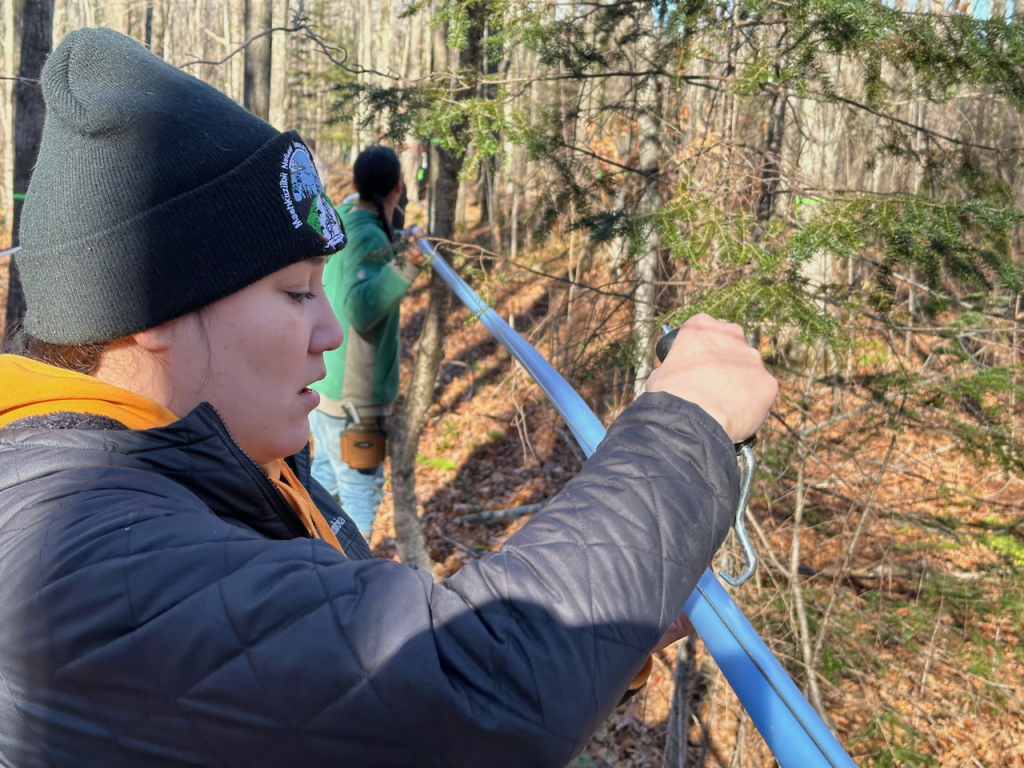
Although maple season begins in late winter, Bad River prepared early to avoid heavy snow. The community plans to continue the use of traditional taps and bags—a culturally vital practice—while also exploring tubing as a more efficient, sustainable option for larger harvests. During hands-on learning, participants saw how tubing reduces labor, increases sap yield, and keeps sap cleaner.
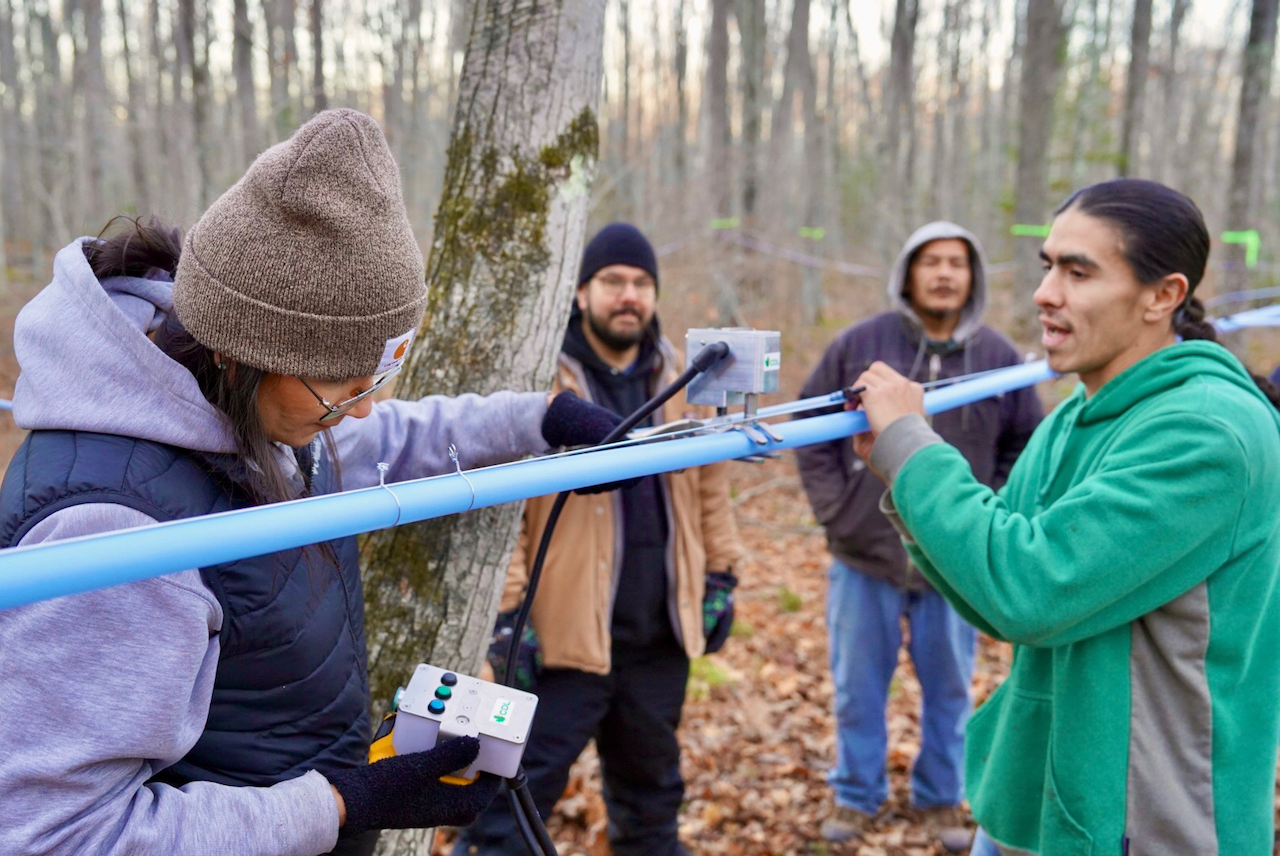
Photo by Dan Cornelius.
The workshop was led by D.J. Micik of the Menominee Department of Agriculture and Food Systems and Dan Cornelius of the Indigenous Food Systems Resilience Project. They guided participants through layout planning, line tensioning, drop‑line installation, and troubleshooting common issues. Their instruction blended technical skills with the cultural significance of maple sugaring across Tribal nations.
Reflecting on the day, Micik shared, “It’s always a great day when you get to spend it surrounded by trees, the sounds of nature, and others. It’s even better being in the sugarbush and being able to pass on knowledge to other Tribal members to help get them to build their confidence and want to learn more about tubing systems and maple sugaring all around. I really enjoyed this experience and I hope they all did as well. “
The workshop’s hands‑on format emphasized not only learning by doing, but also building the practical skills participants need to bring this knowledge home, strengthening maple‑sugaring efforts within their own communities. Wayne Mosay, representing St. Croix Tribal Food Sovereignty, emphasized how valuable the hands‑on learning was. “The Maple Syrup Tubing workshop provided me with knowledge of new tools that are used for gathering maple syrup,” he said. “It was very informative to learn how to actually set up the tubing system, since I had only ever seen completed systems already assembled. I’m also working on hopefully getting a tubing system for St. Croix so we can continue moving toward self‑sufficiency in producing maple syrup for our community and the foods we make. Miigwech for the invite—it felt really good to witness different communities coming together to further our knowledge.”
From Menominee’s equipment trailer to Bad River’s leadership, each partner played a vital role in the workshop’s success. The day demonstrated how shared resources and knowledge can strengthen Indigenous food systems and support long‑term food sovereignty.
As blue tubing lines stretched through the trees and sunlight filtered through the canopy, the workshop stood as a reminder that Tribal nations grow stronger—culturally and economically—when they work together. Bad River will continue using both tubing and sap bags to balance efficiency with tradition, ensuring community involvement and cultural teachings remain at the heart of their sugarbush.