Home » Indigenous Food Systems Resilience » Indigenous Crops and Livestock
Indigenous Crops and Livestock

Indigenous Crops and Livestock
What We Do
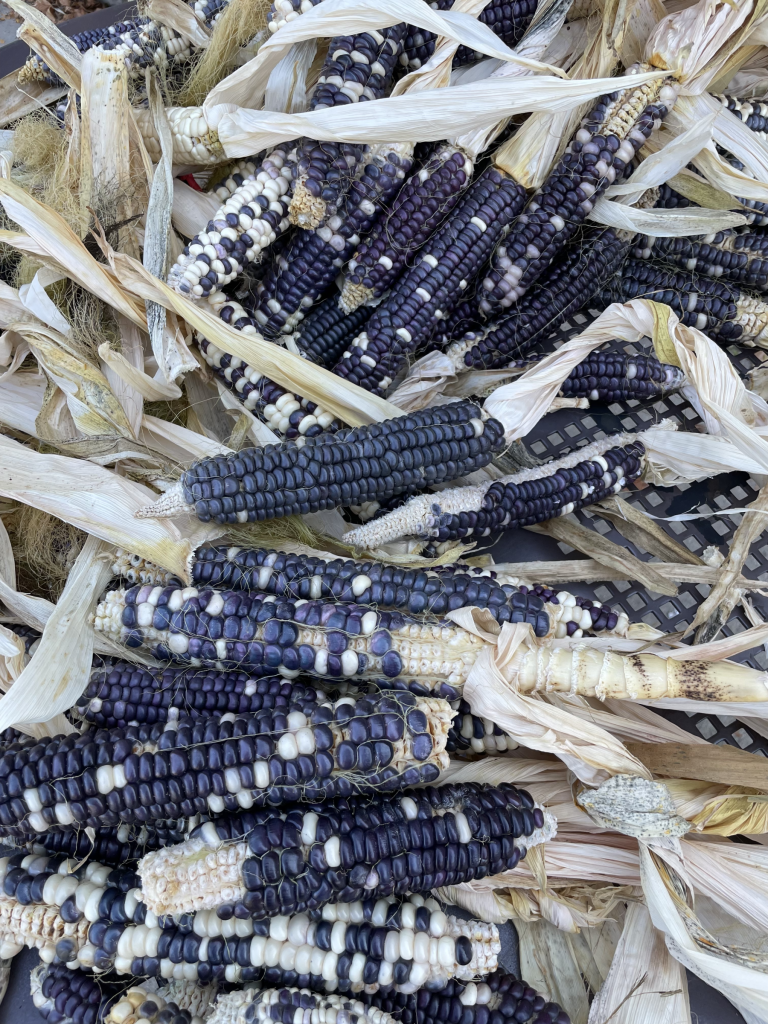
The Indigenous Crops & Livestock Team is working with our partners to support Tribal producers to scale up Indigenous corn production effectively and provide critical trainings in collaboration with UW-Madison Extension and the College of Agricultural and Life Sciences.
Tribal Partners
- Ho-Chunk Department of Agriculture
- Menominee Department of Agriculture and Food Systems
- Wisconsin Tribal Conservation Advisory Council
- Great Lakes Intertribal Food Coalition
- Ohe·láku Corn Growers Cooperative in Oneida
Training and Capacity Building
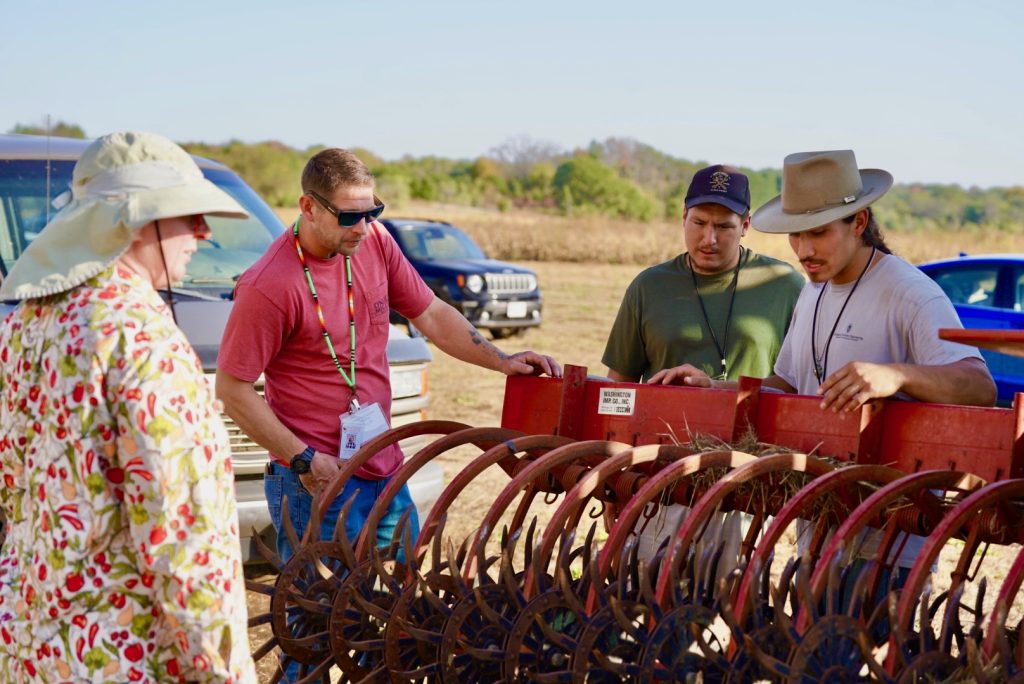
We are working with or Tribal partners to research and demonstrate ways to mechanize Indigenous corn harvest and processing to support Tribal producers in meeting demand for Indigenous corn (such as for the Tribal Elder Food Box program).
We are working with the Division of Extension and UW-Madison College of Agriculture and Life Sciences to support our Tribal partners’ training needs on topics including:
- introductory agronomy
- cover crops and soil health
- entomology including pollinators, beneficial insects, and pests
- agricultural equipment safety
- weed management
- fruit tree pruning
We have organized and co-hosted over 18 trainings since 2023 including major events like the Great Lakes Indigenous Food Producer Academy in July 2024 and the Intertribal Harvest Gathering in October 2025.
Arboretum Indigenous Research Garden
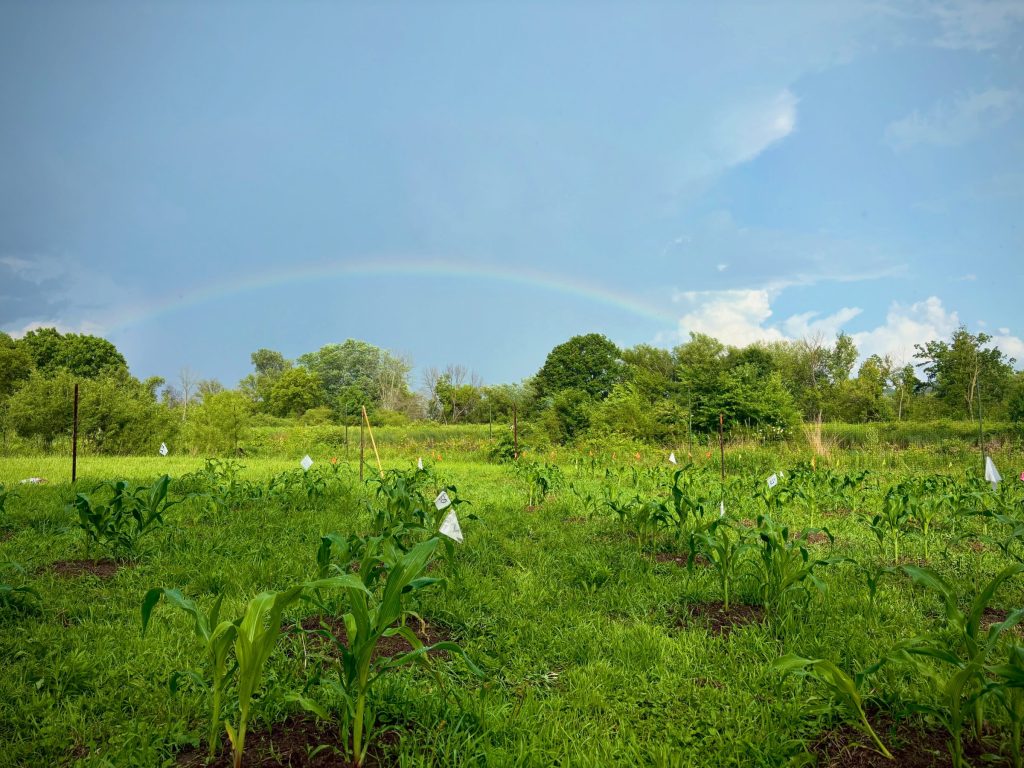
The Indigenous Crops & Livestock Team also coordinates the UW Arboretum Indigenous Research Garden on Monroe Street. The garden was established in 2019 as a collaborative project for demonstrating traditional mounded companion planting, testing new research ideas, and engaging the campus and Madison communities around Tribal food systems.
If you are interested in volunteering at the garden, please reach out to Hanna McIntosh (hanna.mcintosh@wisc.edu).